Introduction
Blockchain technology is no longer limited to cryptocurrencies. Today, businesses across industries are leveraging blockchain to improve transparency, security, efficiency, and trust. For small businesses and network marketers, blockchain presents new opportunities to streamline operations, build customer confidence, and create innovative business models.
As digital transformation accelerates, understanding blockchain can provide a significant competitive advantage.
What is Blockchain Technology?
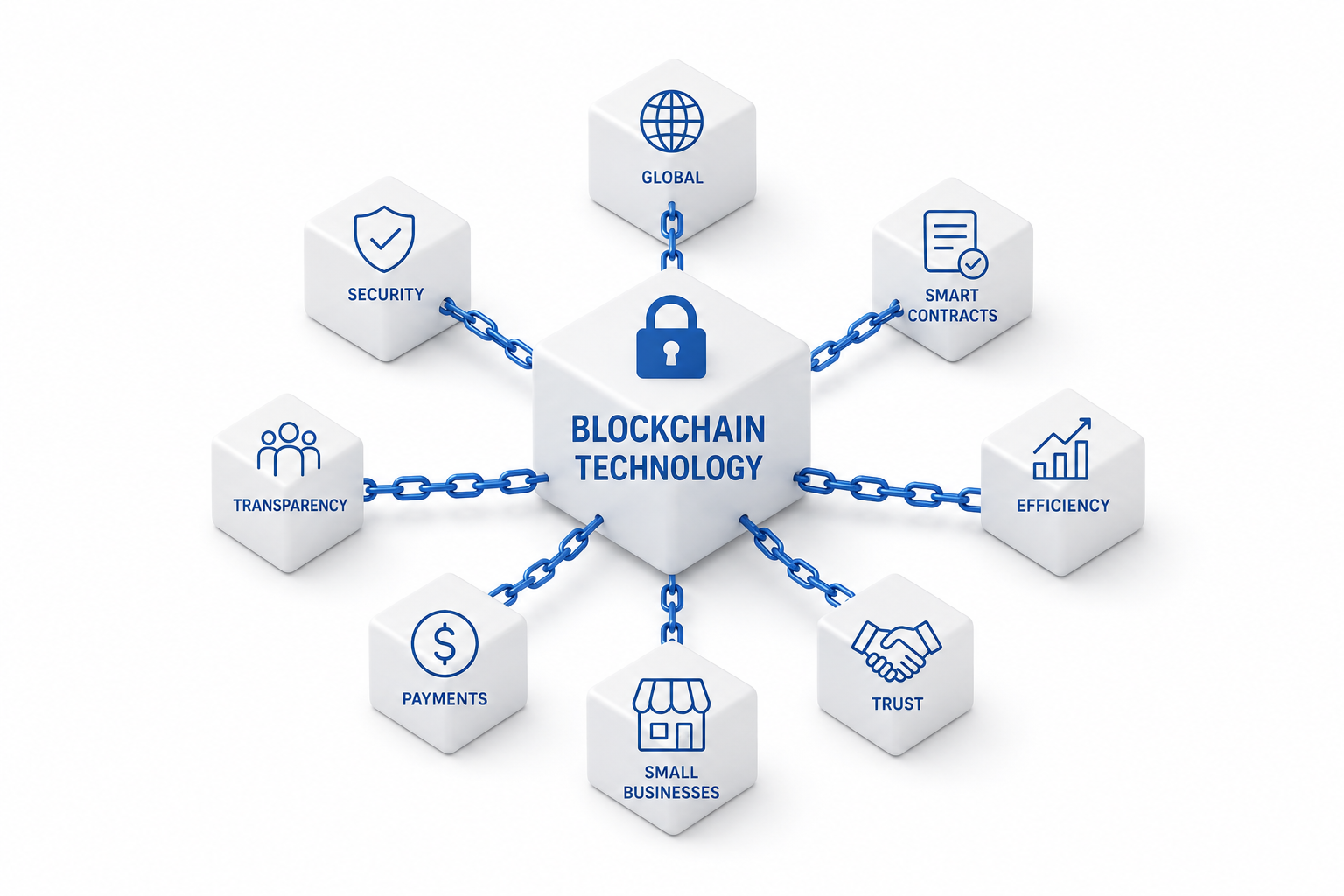
Blockchain is a decentralized digital ledger that records transactions across multiple computers. Instead of relying on a central authority, every transaction is verified and stored across a network, making the data highly secure and difficult to alter.
Key characteristics include:
- Transparency – All authorized participants can view transaction records.
- Security – Advanced cryptography protects data.
- Immutability – Records cannot be easily changed once stored.
- Decentralization – No single entity controls the network.
- Automation – Smart contracts can execute agreements automatically.
Why Blockchain Matters for Small Businesses
Small businesses often face challenges such as limited resources, trust-building, payment processing costs, and operational inefficiencies. Blockchain can help address these issues.
1. Enhanced Security
Cybersecurity threats continue to grow. Blockchain's distributed architecture reduces the risk of data manipulation and unauthorized access.
Benefits:
- Secure customer records
- Protection against fraud
- Reduced risk of data breaches
2. Faster and Lower-Cost Payments
Traditional payment systems often involve intermediaries, processing delays, and transaction fees. Blockchain-based payments can significantly reduce costs and improve transaction speed.
Benefits:
- Faster international payments
- Lower transaction fees
- Improved cash flow management
3. Transparent Supply Chain Management
Businesses dealing with products can track goods from manufacturing to delivery.
Benefits:
- Increased customer trust
- Better inventory tracking
- Reduced counterfeit products
4. Smart Contract Automation
Smart contracts are self-executing digital agreements that activate when predefined conditions are met.
Benefits:
- Automated payments
- Reduced paperwork
- Lower administrative costs
- Faster execution of agreements
Blockchain Opportunities for Network Marketers
Network marketing thrives on trust, transparency, and accurate commission tracking. Blockchain can solve many common challenges in the industry.
Transparent Commission Tracking
Distributors often worry about commission accuracy. Blockchain provides an immutable record of sales and payouts.
Advantages:
- Real-time tracking
- Accurate commission calculations
- Increased trust within the network
Fraud Prevention
Blockchain can help eliminate fake registrations, duplicate accounts, and manipulated commission structures.
Advantages:
- Verified transactions
- Reduced fraudulent activities
- Greater business credibility
Global Expansion
Network marketers frequently operate across borders. Blockchain enables easier cross-border transactions without relying heavily on traditional banking systems.
Advantages:
- Faster global payments
- Lower transfer costs
- Access to international markets
Customer Loyalty Programs
Blockchain-powered reward systems allow businesses to create secure and transferable loyalty points.
Advantages:
- Increased customer engagement
- Better retention rates
- Enhanced brand loyalty
Real-World Blockchain Applications
Digital Payments
Businesses can accept blockchain-based payments for products and services.
Identity Verification
Secure customer verification reduces fraud and enhances compliance.
Asset Management
Track ownership of digital or physical assets with complete transparency.
Membership Systems
Create blockchain-based memberships with verifiable credentials.
Referral Programs
Network marketers can automate referral rewards through smart contracts.
Common Myths About Blockchain
Myth 1: Blockchain is Only for Cryptocurrency
While cryptocurrencies are one use case, blockchain supports supply chains, contracts, healthcare records, finance, and many other applications.
Myth 2: Blockchain is Too Expensive
Modern blockchain solutions are becoming increasingly affordable, even for startups and small businesses.
Myth 3: Blockchain is Difficult to Use
Many blockchain platforms now offer user-friendly interfaces requiring little technical expertise.
How Small Businesses Can Start Using Blockchain
Step 1: Identify Business Challenges
Determine where transparency, security, or automation could improve operations.
Step 2: Explore Suitable Platforms
Research blockchain solutions that align with your business goals.
Step 3: Start Small
Begin with payment systems, loyalty programs, or document verification.
Step 4: Educate Your Team
Ensure employees understand the basics and benefits of blockchain technology.
Step 5: Scale Strategically
Expand blockchain integration as your business grows.
The Future of Blockchain for Businesses
Blockchain is expected to become a foundational technology for digital business operations. As adoption grows, businesses that embrace blockchain early may gain advantages through increased efficiency, customer trust, and innovative revenue opportunities.
For network marketers, blockchain can create transparent compensation systems, strengthen distributor confidence, and support global growth. For small businesses, it offers a practical pathway toward more secure, automated, and efficient operations.
Conclusion
Blockchain technology is transforming the way businesses operate. From secure transactions and smart contracts to transparent commission systems and global payment solutions, blockchain offers tangible benefits for small businesses and network marketers alike.
Organizations that begin exploring blockchain today will be better positioned to adapt to the evolving digital economy and unlock new opportunities for growth, innovation, and long-term success.
Blockchain is not just the future of finance—it is becoming the future of business itself.